
Download our FREE Assessment Checklist! In just 2 minutes you can uncover if an assessment is right for you.
Assessment at Evolved Education Company
Expert evaluations that show how your child really learns, so you can make confident decisions about school, support, and what comes next.
Every child learns differently - not every school sees it
Most parents come to us with a question they can’t quite answer. Not “what’s wrong with my child,” but something harder to name: a sense that there’s more going on than grades and test scores reveal: that the tutoring isn’t landing, that the school everyone else is applying to might not be right for their kid, that the frustration at homework time runs deeper than the homework itself.
Assessment is where we start to answer that question.
Get clarity about how your child learns
We offer six core assessment pathways, each designed to answer different questions families may have at different stages. Click on the ‘+’ to read more.
Academic assessment

Our core one-on-one assessment evaluates reading, writing, and math. Because it’s one-on-one, we get to watch a student actually work, not just review what they’ve produced.
- For younger students, the process is hands-on and tactile — manipulatives, read-alouds, and responsive teaching moments.
- For older students, we go deeper into specific skills and often ask them to bring their own work, so we can see how they approach material that’s already familiar to them. In both cases, we’re paying attention to more than right and wrong answers.
- For some students, we may provide a targeted, virtual assessment (sometimes called a “Scope” assessment).
Mindprint Learning (ages 8 and up)

Most assessments tell you what a student knows. Mindprint tells you how their brain learns.
It’s a computer-based cognitive assessment that maps the skills most predictive of academic success — memory, reasoning, executive function, and processing speed — producing a learning profile that shows where your child is strong, where there’s room to develop, and how those patterns are likely to show up in school.
We also use Mindprint to decide whether a full neuropsychological evaluation (a comprehensive clinical assessment of learning, attention, and cognitive function, typically conducted by a psychologist) is worth pursuing — it often surfaces patterns that deserve a closer look, at a fraction of the time and cost.
Brown Executive Fuction & Attention Scales
Executive function is the collection of mental skills that makes learning actually work: staying organized, managing time, holding information in working memory, shifting focus, and controlling impulses.
When these skills are underdeveloped, students often look like they have a motivation problem or a memory problem — when what they actually have is an executive function profile that hasn’t been identified yet.
The Brown scales ask both you and your child to fill out a form separately, and the comparison between those perspectives is often one of the most illuminating parts of the process.
Pre-admissions assessment
For families navigating admissions at any grade level, our assessments are tailored to what actually matters at each stage.
- For kindergarten and early applicants, the focus is on the building blocks: early reading and language skills, beginning number sense, fine motor development (like how the child handles a pencil or crayon), and whether they’re ready to engage with structured learning.
- Designed to be age-appropriate and genuinely playful.
- Designed to be age-appropriate and genuinely playful.
- For middle and high school applicants, the assessment goes broader. In addition to academic skills, we look at how a student manages their time and workload, how they handle stress or uncertainty, how they present themselves in conversation, and how well they know themselves.
- We’re also paying attention to four qualities we think matter everywhere: resilience, responsibility, resourcefulness, and reflection.
Kindergarten readiness
A specialized assessment for families applying to kindergarten programs with their own standardized readiness evaluation. We work with your child in advance so the experience is familiar and comfortable.
College Readiness + Career Profile
For high school students navigating the college process, this assessment is designed to clarify learning profile and strengthen self-advocacy strategies for a new academic environment. It also includes a career–learning–personality profile to help students better understand what they want to study and how they learn best, supporting more aligned and thoughtful postsecondary choices.
The two reasons families come to us for assessment
1. School placement
If you’re building a school list for nursery, kindergarten, middle school, high school, or college, an assessment gives you something most families are making decisions without: a clear picture of how your child learns and what kind of environment will actually suit them.
Not every strong student belongs at the same school. A child who needs close teacher relationships and frequent check-ins will struggle in a fast-paced, highly independent environment, regardless of their academic ability. Assessment tells us which environment is the right one, and why.
2. Understanding and support
When something isn’t working (grades are slipping, homework takes twice as long as it should, or your child is working hard and still falling behind), assessment helps identify what’s actually going on.
Often, the problem a family comes in with isn’t the real one.
A reading struggle may trace back to how quickly a child processes information.
A focus issue may have more to do with how much their brain is holding at once than whether they’re paying attention.
Habits around organization and follow-through can quietly undermine a student who is genuinely capable.
If you’re not sure which applies to your family, the first step is a free 15-minute call with our team.

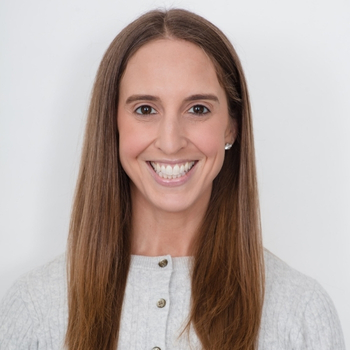
Evolved's assessment process is human-to-human.
“When I assess a student, I’m not watching them take a test. I’m working with them — introducing something new, asking questions, noticing what happens when something is hard. I want to see academics in action: not just what a child knows, but how they think.” Becky Reback, Director of Assessment
Unlike other assessment experiences, our team doesn’t just administer tasks and score results; we put students in real situations and watch how they respond.
- How do they handle something hard?
- How do they react to feedback?
- Do they push through or pull back?
That’s information a test score can’t tell you.
Without this kind of clarity, families are often making decisions based on grades, scores, or school reputation, not on how their child actually learns. Our assessment surfaces what’s really going on, so any support that follows is targeted to your child specifically, not just generally applied.
What happens in an assessment session?
An Evolved assessment is a one-on-one session, in person or on Zoom, typically 45–60 minutes, structured but genuinely interactive. Throughout the session, our expert educators are observing more than academic skills.
We’re watching executive functions in real time:
- how your child handles a problem they don’t immediately know how to solve, whether they self-correct,
- how much support they need before they can proceed independently, and
- how they respond to new material being introduced mid-task.
We might give your child a problem that’s slightly above their current level, teach them a quick strategy, and then watch how they apply it.
Age range
What it looks like
Early childhood
(pre-K through grade 2)
Hands-on and playful — letter sounds, rhyming, math with physical manipulatives, short read-alouds. Tactile and multi-sensory.
Elementary
(grades 3-5)
More traditionally academic — reading passages, structured writing tasks, math work — but still interactive and conversational throughout.
Middle school
(grades 6-8)
Deeper into specific skill areas; we’re also watching how the student manages challenges and self-directs.
High school
Often specialized rather than comprehensive. We frequently ask students to bring their own work — a homework assignment, a draft in progress — so we can see how they engage with material that’s actually theirs.
What families have learned from assessments
Real outcomes. Identifying details changed.
When the real challenge wasn’t the subject
A family came to us concerned about math. Their child was putting in real effort, spending significantly more time on homework than his classmates, and still falling behind.
The academic assessment confirmed a skills gap, but a Mindprint told us something more important: processing speed was considerably slower than the rest of his cognitive profile. This wasn’t a student who needed more practice. He needed more time and a different instructional pace. The assessment didn’t just name the problem; it changed the nature of our support plan entirely.
When a school list needed rethinking
A student came in for a placement assessment ahead of a competitive admissions cycle. Academically, he was solid. But throughout the session, he needed repeated reassurance before he could continue: was he on the right track, was this the right method, was he doing it correctly? He’d start problems correctly, then stop and second-guess himself.
What we observed wasn’t a skill gap: it was anxiety showing up in his learning. That finding changed his school list. An environment that expected students to self-direct and rarely offered feedback mid-task wasn’t the right fit, regardless of his academic ability.

Your assessment report and what happens next
At the end of the process, families receive a written report organized by skill area, with a rating system that reflects where your child is working independently, where some support is needed, and where more development is warranted. Each section includes specific observational notes — not just scores.
Here’s what to expect after your assessment
If you came for School Placement
Your placement advisor walks you through the report alongside your school list and application strategy. If significant flags surface, our Director of Assessment joins that conversation.
If you came for Tutoring
Your tutor receives the report before your child’s first session, so the work begins where it should, not where it takes a few sessions to find.
If you came for
Independent Assessment
Our education expert debriefs with you directly: what they observed, what it means, and what they recommend.